Best Email Marketing for Shopify in 2026
Compare the best email marketing platforms for Shopify. Honest pricing, features, and the one conversion killer no email tool can fix.
Choosing the Best Email Marketing Platform for Shopify
Email marketing is one of the highest-ROI channels available to Shopify store owners. Studies consistently show that every dollar spent on email marketing can return $36 to $40 on average, far outpacing social media ads and paid search. But here’s the thing most guides won’t tell you: the platform you use matters less than how your emails connect to the actual shopping experience.
You can have the best subject lines, the most beautiful templates, and perfectly segmented lists. However, if your customer clicks through to your store and can’t see the discount you promised, that email just wasted everyone’s time.
Whether you’re searching for the best email marketing app for Shopify or trying to figure out which email marketing Shopify app actually integrates well with your store, this guide covers all nine leading platforms (what each one does well), honest pricing breakdowns, and most importantly, the one conversion killer that no email tool can fix on its own.
What Makes Shopify Email Marketing Actually Work
Before diving into platforms, understand what separates emails that generate revenue from emails that just get opened.
The best email marketing for Shopify isn’t about sending more emails; it’s about creating a seamless path from inbox to checkout. That means three things need to happen:
- The Attention: The email grabs the user’s interest in a crowded inbox.
- The Promise: The click-through gives customers exactly what you offered.
- The Checkout: The final purchase experience is entirely frictionless.
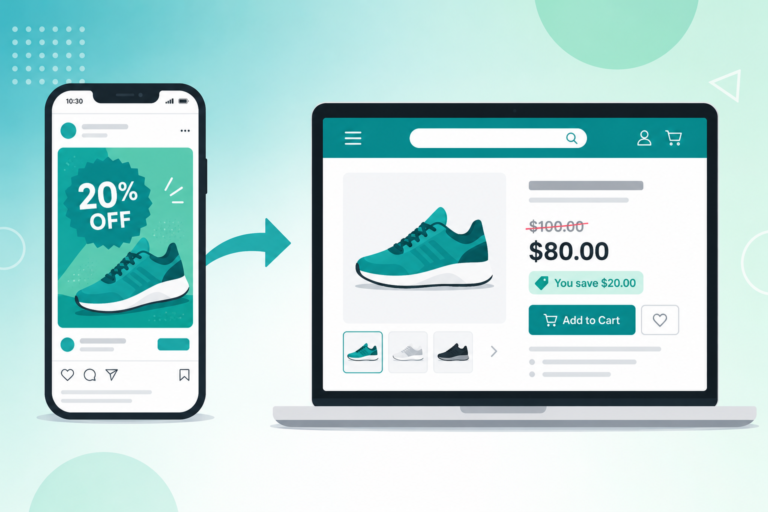
Most store owners obsess over the first part: open rates, subject lines, send times. However, the drop-off usually happens after the click. A customer opens your “20% OFF” email, clicks through excitedly, and lands on a product page showing full price. Now they have to remember a coupon code, find the Shopify discount code field at checkout, and manually apply it. That friction breaks the user journey and kills conversions.
Keep that in mind as we look at each platform below. The email tool gets customers to your door. What happens next is up to your store.
All 9 Platforms at a Glance
Before we get into the details, here’s a quick comparison to help you narrow down your options:
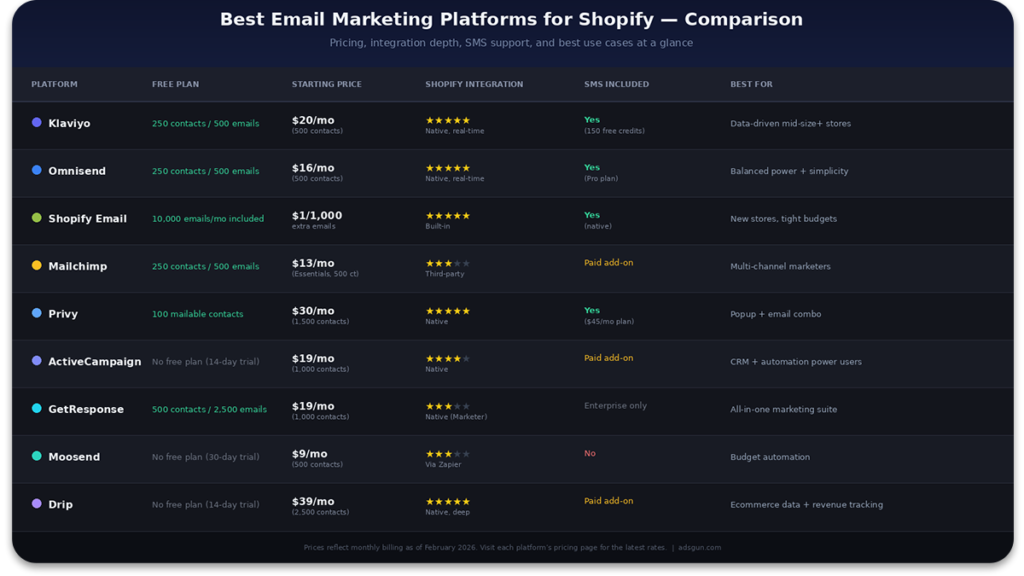
Now let’s break down each platform in detail.
Klaviyo: Best for Data-Driven Stores
Overall, Klaviyo has become the go-to email marketing platform for serious Shopify merchants, and for good reason. Notably, with over 117,000 brands using it, Klaviyo’s deep Shopify integration syncs customer data in real time, letting you build highly targeted campaigns based on browsing behavior, purchase history, and engagement patterns.
- What it does well: Klaviyo’s automation flows are where it really shines. You can set up abandoned cart sequences, welcome series, post-purchase follow-ups, and win-back campaigns that trigger based on specific customer actions. In fact, the segmentation is incredibly granular. You can target customers who viewed a specific product but didn’t buy, or who haven’t purchased in 60 days.
- Where it falls short: Pricing. Klaviyo charges based on your total number of contacts, even those you don’t email. For growing stores, costs can climb quickly. Moreover, the learning curve for advanced segmentation is also steep. Concepts like Boolean data types and custom dimensions can feel overwhelming if you’re not technically inclined.
- Best for: Mid-size to large Shopify stores that want advanced analytics and are willing to invest time (and budget) in sophisticated email strategies.
- Pricing: Free for up to 250 contacts. Paid plans start at $20/month for up to 500 contacts.
Omnisend: Best Balance of Power and Simplicity
Omnisend is built specifically for e-commerce and hits a sweet spot between Klaviyo’s complexity and Shopify Email’s simplicity. It combines email, SMS, and push notifications in one platform, with pre-built automation workflows that you can launch in minutes.
- What it does well: The pre-built automation templates are a standout feature. Abandoned cart recovery, welcome series, browse abandonment, and order confirmation flows are ready to go with minimal setup. Additionally, Omnisend includes a product recommender that dynamically inserts relevant products into your emails based on customer behavior.
- Where it falls short: Although Omnisend’s segmentation is solid, it doesn’t match Klaviyo’s depth for stores that need hyper-specific targeting. The free plan caps you at 250 contacts and 500 emails per month, which makes testing difficult.
- Best for: Small to mid-size Shopify stores that want powerful automation without the steep learning curve. Great for merchants who also want SMS marketing built in.
- Pricing: Free plan available. Standard starts at $16/month for 500 contacts. Pro starts at $59/month with unlimited emails and SMS credits.
Shopify Email: Best for Getting Started
Shopify Email (also referred to as Shopify Messaging since late 2025) is the built-in option that comes with every Shopify plan. It’s simple, affordable, and works directly from your Shopify admin with no third-party integration needed.
- What it does well: The biggest advantage is convenience. You can create campaigns using your existing product catalog, customer segments, and store data without leaving your Shopify dashboard. It includes 10,000 free emails per month, and as a result, it’s the most affordable starting point for new stores. For basic campaigns like sale announcements, new product launches, and simple newsletters, it gets the job done.
- Where it falls short: Shopify Email struggles with automation and advanced segmentation. You can set up basic automated workflows, but they lack the complexity and multi-channel support of dedicated platforms. There’s no A/B testing for email content, and segmentation options are more basic compared to Klaviyo or Omnisend.
- Best for: New Shopify stores, budget-conscious merchants, or anyone who wants simple email marketing without extra apps or monthly fees.
- Pricing: 10,000 free emails/month included with any Shopify plan. $1 per 1,000 additional emails.
Mailchimp: Best for Multi-Channel Marketing
Mailchimp is one of the most recognized names in email marketing. While it’s not built specifically for Shopify, its broad feature set and massive template library make it a popular choice for merchants who also do content marketing, social media, and brand building.
- What it does well: Mailchimp offers a huge library of templates, a user-friendly drag-and-drop editor, and strong integrations beyond just Shopify. If you’re running marketing across multiple platforms (email, social, landing pages, postcards), Mailchimp brings it all under one roof. Its analytics dashboard is clean and easy to understand.
- Where it falls short: E-commerce-specific features lag behind Klaviyo and Omnisend. Automation workflows are less sophisticated, and Shopify integration isn’t as deep or real-time. Therefore, pricing can escalate quickly as your list grows. Mailchimp charges based on contacts across all audiences, and advanced features are locked behind higher-tier plans. It’s also worth noting that Mailchimp’s classic automation builder was retired in mid-2025, with automated emails now requiring a paid plan.
- Best for: Shopify stores that need a general marketing platform covering email, social media, and content, not just e-commerce-focused campaigns.
- Pricing: Free for up to 250 contacts. Essentials starts at $13/month.
Privy: Best for Popups + Email in One Place
Privy combines onsite conversion tools (popups, banners, spin-to-win displays) with email and SMS marketing in one Shopify-focused platform. If you’re looking for a Shopify pop up discount tool that also handles email, Privy is the go-to. With over 4,800 reviews in the Shopify App Store, it’s one of the most popular apps for list growth.
- What it does well: Specifically, Privy’s popup builder is one of the best available for Shopify stores. Exit-intent popups, quiz-based signups, and cart-saver displays are easy to create and deploy without a developer. The email side handles basics well: welcome series, abandoned cart recovery, and broadcast campaigns. Everything is designed for simplicity, and you can go from zero to a live campaign in under 10 minutes.
- Where it falls short: Privy’s automation lacks branching logic. For instance, you can’t build different email flows based on whether someone opened or clicked a previous message. Segmentation is basic compared to Klaviyo or even Omnisend. The email builder is functional but limited in design flexibility. As your marketing gets more sophisticated, you’ll feel the ceiling quickly.
- Best for: Small Shopify stores that want a single app for list growth (popups) and basic email/SMS marketing without juggling multiple tools.
- Pricing: Free plan for up to 100 mailable contacts. Starter at $30/month (1,500 email contacts, unlimited sends). Growth at $45/month (adds SMS).
ActiveCampaign: Best for CRM + Automation Power Users
ActiveCampaign is a marketing automation and CRM platform that goes well beyond basic email. It’s built for businesses that want to manage the full customer lifecycle, from first email to sales pipeline, in one system.
- What it does well: In particular, ActiveCampaign’s automation builder is one of the most powerful in the industry. As a result, you can build complex multi-step workflows with conditional branching, lead scoring, and CRM deal management all tied together. The Shopify integration syncs customer data, purchase history, and abandoned cart events, letting you trigger highly targeted campaigns. With 950+ integrations, it connects to virtually anything in your tech stack.
- Where it falls short: No free plan, only a 14-day trial. The Starter plan ($19/month) is limited: only one user, basic segmentation, no landing pages, and automations without conditional logic. To get real automation power, you’ll need the Plus plan at $59/month. Furthermore, ActiveCampaign isn’t e-commerce-first. It’s a general marketing platform, so some Shopify-specific features (like product recommendations in emails) require more manual setup compared to Klaviyo or Omnisend.
- Best for: Established Shopify stores that also need CRM capabilities, lead scoring, and advanced multi-step automations that go beyond basic e-commerce flows.
- Pricing: No free plan. 14-day trial. Starter at $19/month (1,000 contacts). Plus at $59/month. Pro at $99/month.
GetResponse: Best All-in-One Marketing Suite
Since then, GetResponse has evolved from a simple email tool into a full marketing platform with email, automation, landing pages, webinars, and even a website builder. It’s a generalist tool that covers a lot of ground.
- What it does well: If you need more than just email, GetResponse delivers. It includes landing page creation, webinar hosting, sales funnels, and AI-powered product recommendations, all in one subscription. The Marketing Automation plan ($59/month) offers solid workflow builders with behavioral triggers. Their AI tools help generate email content and subject lines quickly.
- Where it falls short: The Shopify integration requires the Ecommerce Marketing plan at $119/month, which is a steep entry point. Cheaper plans restrict the Shopify connection significantly. Contact data only syncs every 24 hours (not real-time like Klaviyo), which means delays in triggering automations. Support documentation for the Shopify integration is also thin compared to competitors.
- Best for: Larger Shopify stores that need an all-in-one platform with landing pages, webinars, and funnels in addition to email marketing. Also suits stores that sell services or courses alongside physical products.
- Pricing: Free plan for 500 contacts (2,500 emails). Email Marketing at $19/month (1,000 contacts). Marketing Automation at $59/month. Ecommerce Marketing at $119/month (required for full Shopify features).
Moosend: Best Budget-Friendly Automation
Overall, Moosend is a lightweight email marketing platform that punches above its price point. Built in Greece, it offers automation workflows, segmentation, and e-commerce features at some of the lowest prices in the market.
- What it does well: Moosend’s Pro plan starts at just $9/month for 500 contacts and includes unlimited email sends plus access to their full automation builder. Additionally, the drag-and-drop editor is clean and beginner-friendly. For stores that need basic abandoned cart emails, welcome sequences, and product recommendations without paying Klaviyo or Omnisend prices, Moosend gets the job done.
- Where it falls short: The big limitation for Shopify merchants is that Moosend doesn’t have a direct native Shopify integration. You’ll need to connect through Zapier or API, which adds complexity and can introduce sync delays. Additionally, the template library is smaller than competitors, and with around 100 integrations (versus 300+ for Mailchimp), your options for connecting other tools are more limited.
- Best for: Budget-conscious store owners who primarily need email automation and don’t mind using Zapier to connect their Shopify data. Best suited for stores with simpler marketing needs.
- Pricing: No free plan. 30-day free trial. Pro at $9/month (500 contacts, unlimited emails). Moosend+ is custom-priced for larger stores.
Drip: Best for Ecommerce Revenue Tracking
Drip is built exclusively for e-commerce. It tracks every customer interaction, from first visit to repeat purchase, and translates that behavioral data into automated campaigns designed to drive revenue.
- What it does well: Drip’s native Shopify integration is deep. Specifically, it syncs products, orders, customers, and browsing behavior automatically, then organizes your audience into dynamic segments based on purchase value, recency, and engagement. Pre-built Shopify workflows for abandoned carts, price drops, back-in-stock alerts, and welcome series let you launch fast. The revenue attribution dashboard shows exactly which emails and automations are driving sales, a feature that helps you double down on what works.
- Where it falls short: No free plan, and pricing starts at $39/month for 2,500 contacts – making it one of the more expensive options for smaller stores. The email template builder is more basic than some competitors. There’s a learning curve with the advanced behavioral tracking and segmentation, and the platform lacks some visual design polish compared to Omnisend or Mailchimp.
- Best for: Growing Shopify stores that want deep customer data insights and revenue attribution to understand exactly which marketing efforts are producing ROI.
- Pricing: No free plan. 14-day free trial (2,500 contacts, 100 email sends). Plans start at $39/month for 2,500 contacts. Pricing scales with contact count.
Shopify Email vs Mailchimp: Which Should You Choose?
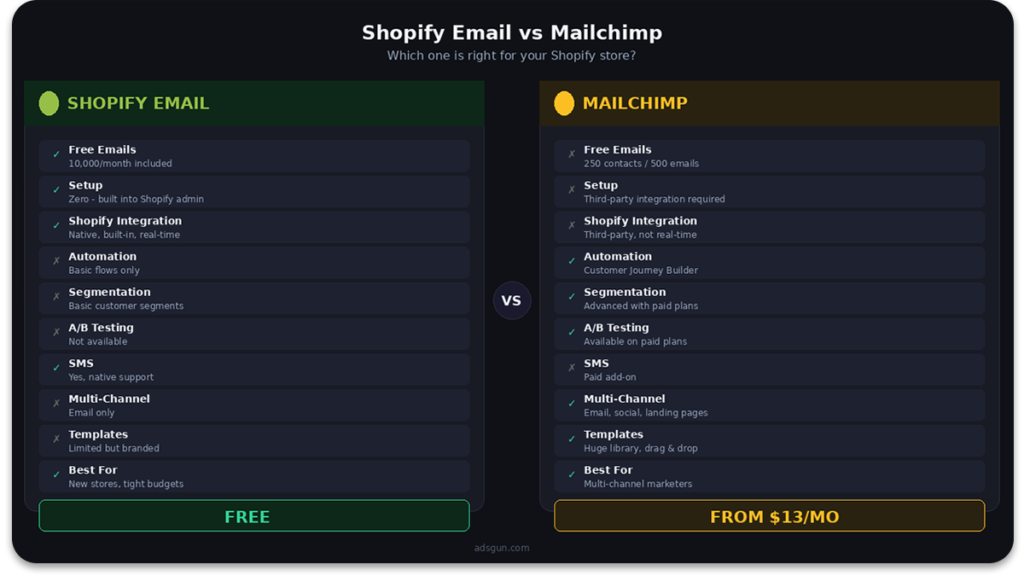
Whether you’re searching for “Shopify Email vs Mailchimp” or “Mailchimp vs Shopify Email,” the answer depends on what you need. This is one of the most common questions Shopify store owners ask, so let’s address it directly.
- Choose Shopify Email if you’re starting out, want to keep things simple, and don’t need advanced automation. The 10,000 free emails per month is hard to beat, and having everything inside your Shopify dashboard means zero setup friction. You won’t need to worry about integrating customer data or installing top Shopify apps. everything is already there.
- Choose Mailchimp if your marketing extends beyond Shopify. If you’re running campaigns across email, social media, landing pages, and postcards, Mailchimp’s broader toolkit makes sense. It also has more design templates and a longer track record with A/B testing, though its e-commerce automation features aren’t as deep as Shopify-native alternatives like Klaviyo or Omnisend.
- The honest take: For most Shopify-only stores, Shopify Email is the better starting point. It’s free, it’s integrated, and it handles the basics well. If you outgrow it and need advanced automation or multi-channel marketing, consider upgrading to Omnisend or Klaviyo rather than Mailchimp – they’re built for e-commerce and integrate more deeply with your store.
The Missing Piece No Email Platform Can Fix
However, here’s the part most email marketing guides skip entirely.
You’ve chosen your platform. Your automation flows are set. Abandoned cart emails are recovering sales. Your welcome series is converting subscribers into buyers. Everything looks great on the email side.
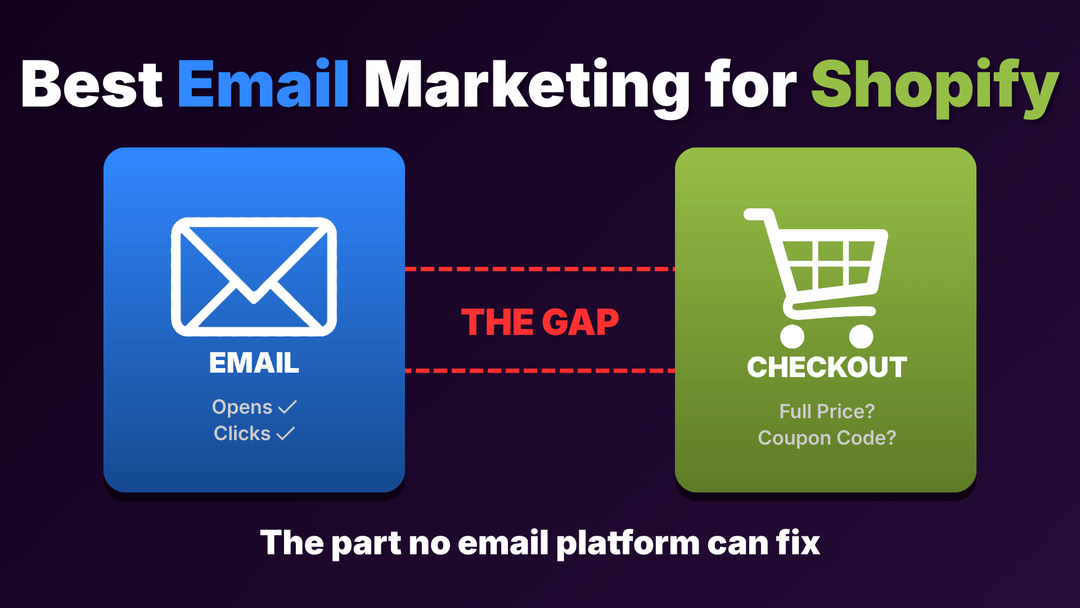
But there’s a gap between the email and the checkout that none of these platforms can close.
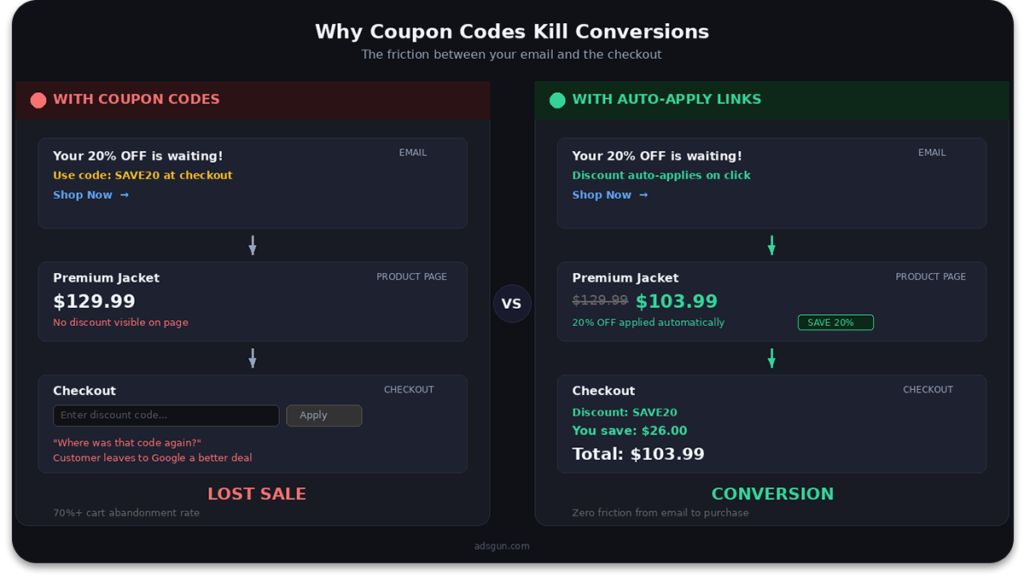
When you include a Shopify discount code in an email, for example, “Use code WELCOME15” – you are adding friction to the customer journey. Specifically, the customer has to remember the code, navigate to checkout, find the Shopify coupon code field, type it in, and hit apply. Every one of those steps gives them a chance to get distracted, confused, or frustrated.
And if they see that empty coupon code field without a code? They might leave your checkout entirely to search for a better deal. As a result, with Shopify cart abandonment rates exceeding 70%, adding friction is the last thing your store needs. You’re losing customers at the exact moment they should be buying, and no customer experience strategy built around email alone can fix that.
The truth is, No email platform, not Klaviyo, not Omnisend, not any of them, can control your Shopify conversion rate once the customer lands on your store. That part of the user journey is entirely up to how your storefront displays pricing and promotions.
How to Close the Gap Between Email and Checkout
The fix is simple: stop sending Shopify coupon codes in your emails. Instead, send links that auto-apply the discount directly.
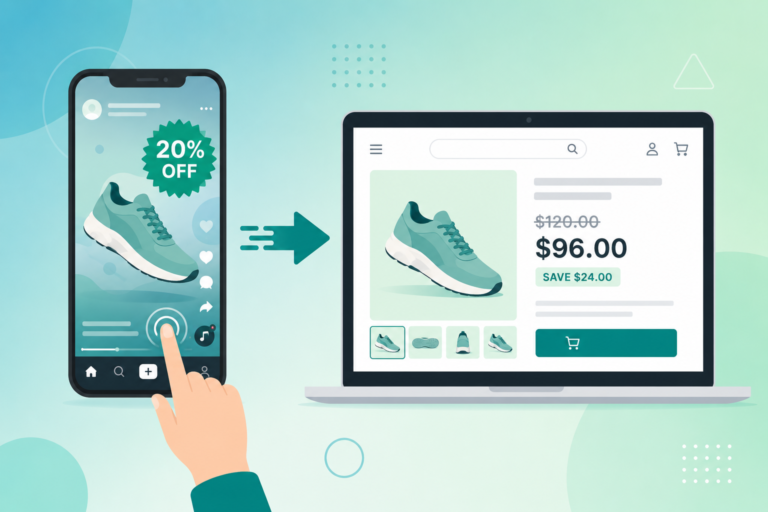
When a customer clicks your email CTA, the discount should therefore already be active on your store. They should see strikethrough pricing and compare at pr
ice on product pages, collection pages, and in the cart, no codes to remember, no fields to fill out, and no need to manually apply discount code at checkout. A visible discount removes every barrier between clicking and buying.
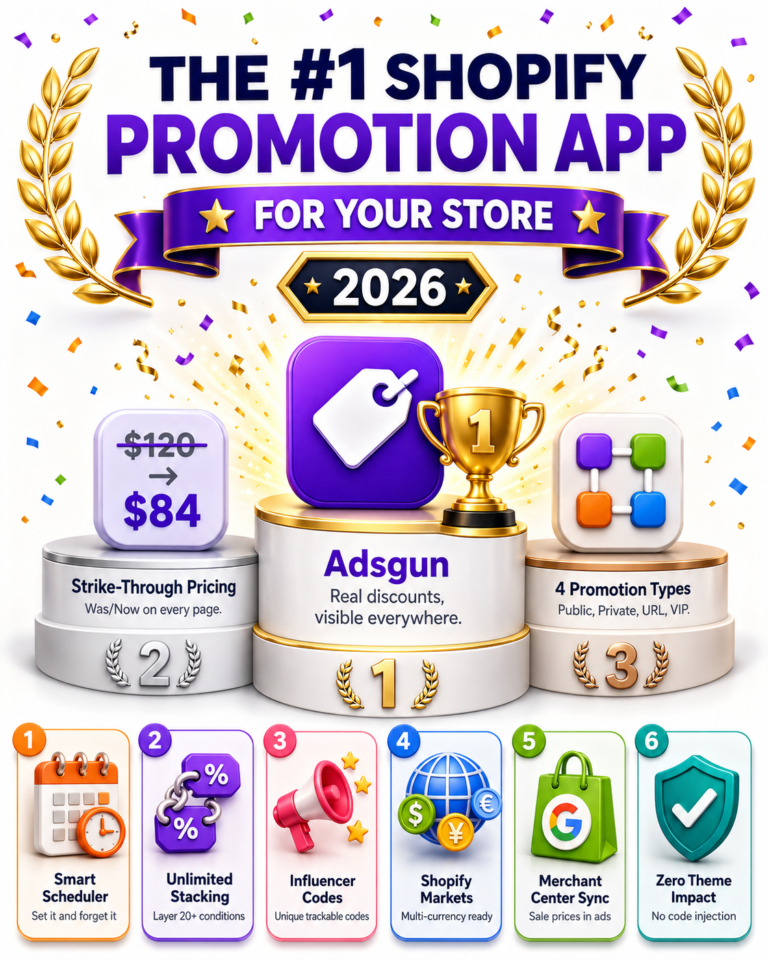
This is exactly what Adsgun does. It works alongside whatever email platform you choose, turning your Shopify promotion code links into a visible, automatic shopping experience. Instead of telling customers to “use code SPRING20 at checkout,” your email link takes them directly to a store where the discounted price is already showing. This eliminates friction, helps reduce bounce rate, and can boost Shopify sales by 20% or more simply by making your Shopify promotions visible throughout the entire shopping experience.
Furthermore, this approach pairs especially well with platforms like Klaviyo and Omnisend, where you can build sophisticated automation flows. Imagine an abandoned cart email where the customer clicks through and instantly sees their discount applied, with savings displayed right on the product. No need to add coupon code manually, no hunting for a Shopify promo code, no reason to leave.
Making Your Email Campaigns Convert More
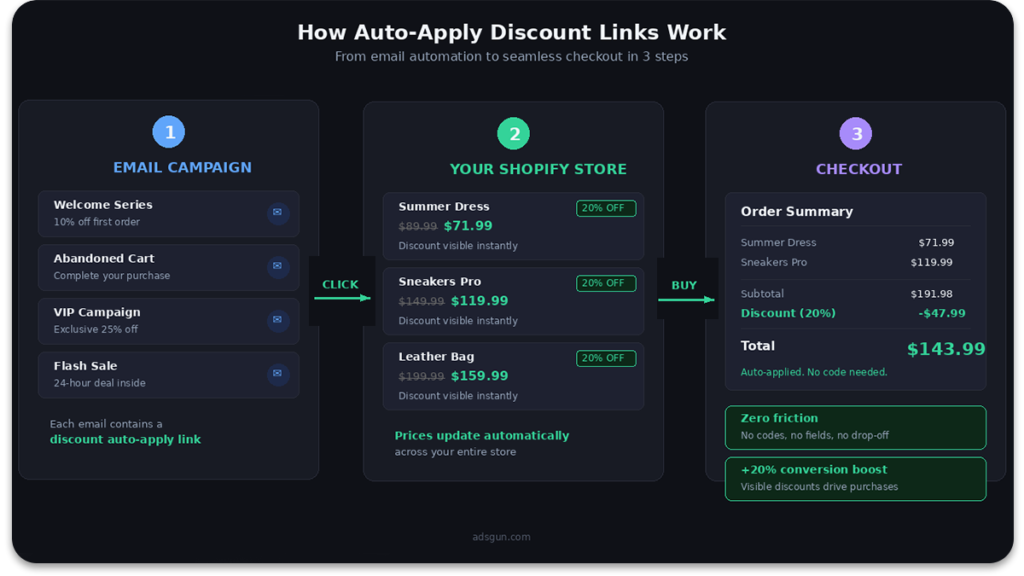
Here are a few practical ways to combine email marketing with Shopify and visible, automatic discounts:
- Welcome series: Instead of sending a code like “WELCOME10,” send a link that auto-applies 10% off. New subscribers see discounted prices the moment they land on your store.
- Abandoned cart recovery: The customer already showed purchase intent. Don’t add friction with a code. Send a recovery link with the discount built in. When they return, they see reduced prices immediately. No need to apply coupon code manually or remember Shopify coupons from an earlier email.
- VIP and loyalty campaigns: Segment your best customers and send exclusive discount links. They click through and see their special pricing across your entire store. As a result, it feels personalized because it genuinely is.
- Flash sales: In particular, time-sensitive campaigns work better when the urgency is visible. Pair your email countdown with strike-through pricing on your store so the deal feels real the moment they arrive. Using Shopify automatic discounts with visible pricing is one of the most effective strategies to increase sales without spending more on ads. For more ideas, check out our guide on how to push sales on your Shopify store.
These strategies proven to increase sales from your existing email list. Instead of making customers copy and apply promo code manually, you create a seamless path from email to purchase. The result is a better shopping experience and fewer abandoned carts, exactly what the best Shopify apps to increase sales are designed to deliver.
Frequently Asked Questions
Does Shopify Have Email Marketing?
Yes. Shopify has a built-in email marketing tool called Shopify Email (now part of Shopify Messaging). It comes included with every Shopify plan and gives you 10,000 free emails per month. You can create campaigns using templates that pull your store branding, products, and customer segments directly from your Shopify admin, no third-party app required.
That said, Shopify Email covers the basics. If you need advanced automation, deep segmentation, or multi-channel campaigns (email + SMS + push notifications), you’ll want a dedicated platform like Klaviyo, Omnisend, or one of the other tools covered in this guide. For stores that frequently use a Shopify voucher code or Shopify discount code in their email campaigns, the real question isn’t which platform sends the email. It’s whether customers can see the savings when they click through.
What Is the Best Free Email Marketing App for Shopify?
Shopify Email is the best free option for most store owners. It comes included with every Shopify plan and gives you 10,000 free emails per month with no additional app to install. For stores that need more features on a free plan, Omnisend offers 250 contacts and 500 emails per month for free, with access to automation workflows and SMS. Klaviyo also has a free tier for up to 250 contacts and 500 emails. If your priority is list growth, Privy’s free plan includes popups and basic email for up to 100 mailable contacts. The right choice depends on whether you need just email (Shopify Email) or a more complete marketing toolkit (Omnisend or Klaviyo).
Which Email Marketing Platform Is Best for Small Shopify Stores?
For stores just getting started, Shopify Email is the easiest and most affordable option. It’s free up to 10,000 emails per month and requires zero setup. As you grow and need more automation, Omnisend offers the best balance of power and simplicity starting at $16/month.
Is Klaviyo Worth It for Shopify?
Klaviyo is worth it if your store generates enough revenue to justify the cost and you’re ready to invest time in learning the platform. Its data-driven segmentation and automation capabilities are best-in-class for Shopify. However, for stores doing under $10K/month in revenue, the cost-to-benefit ratio favors simpler alternatives like Omnisend or even Shopify Email.
Can I Use Multiple Email Marketing Tools with Shopify?
Technically yes, but it’s not recommended. Running two email platforms simultaneously creates duplicate sends, confused analytics, and potential deliverability issues. Instead, pick one primary email platform and supplement it with tools that handle specific gaps, like Adsgun for making your discount pricing visible across your store.
The Bottom Line
Choosing the best email marketing for Shopify depends on your store’s size, budget, and goals. Klaviyo is ideal for data-driven brands ready to invest. Omnisend offers the best balance of features and ease of use. Shopify Email is perfect for getting started. Drip excels at revenue attribution. Privy combines popups with email beautifully. And the others each have their niches: ActiveCampaign for CRM power, GetResponse for all-in-one marketing, Moosend for tight budgets, and Mailchimp for multi-channel reach.
But no matter which platform you choose, your emails are only as good as the experience they lead to. If customers click through to full-price pages and empty coupon fields, even the best email in the world won’t save the sale. You’ll lose customers at the finish line, not because your Shopify discounts weren’t good enough, but because nobody could see them.
The combination that actually helps boost up sales is a strong email platform for getting customers to your store, and a tool like Adsgun for making sure the discount is visible the moment they arrive.